78 signs and markings
Signs giving orders
Read the instruction, not just the shape. Red rings usually prohibit something; blue circles usually tell you what to do. Stop and Give Way have distinctive shapes.
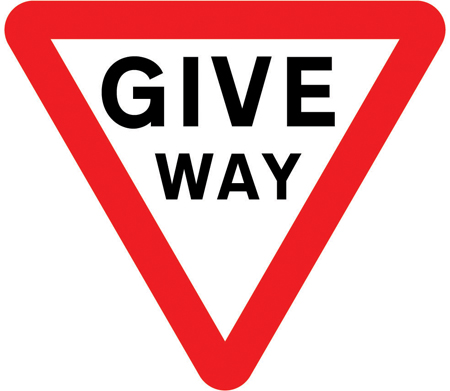
Give way
Give priority to traffic on the major road.
Link to this sign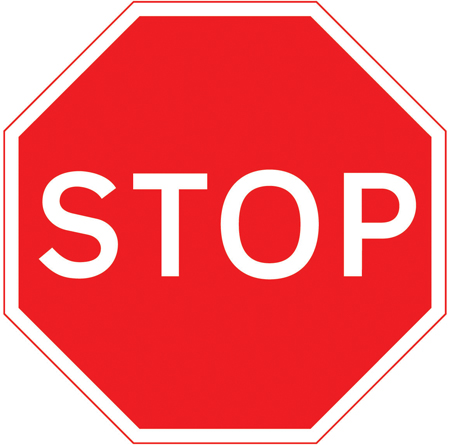
Stop
Stop at the line and give way before proceeding.
Link to this sign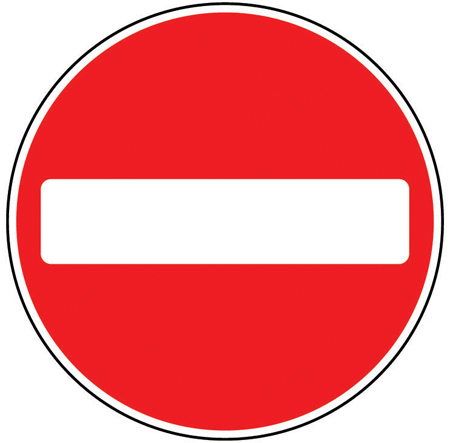
No entry
No vehicles may enter from this direction.
Link to this sign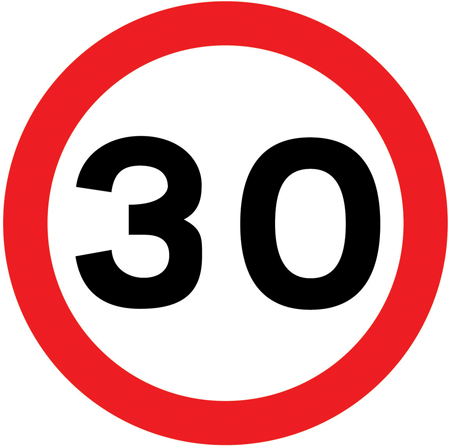
Maximum speed 30 mph
The maximum permitted speed is 30 mph.
Link to this sign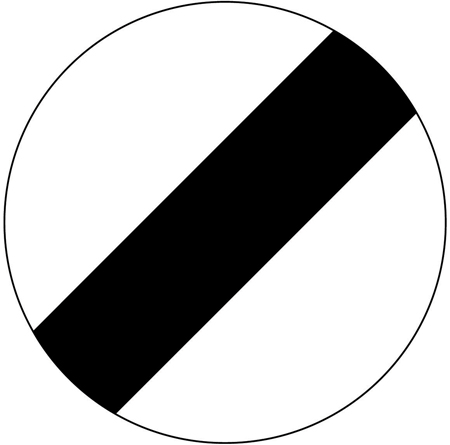
National speed limit applies
The national speed limit for the road and your vehicle applies.
Link to this sign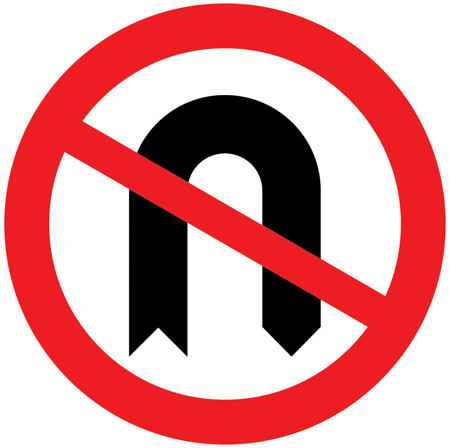
No U-turns
U-turns are prohibited.
Link to this sign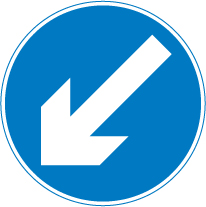
Keep left
Pass to the left of the sign unless directed otherwise.
Link to this sign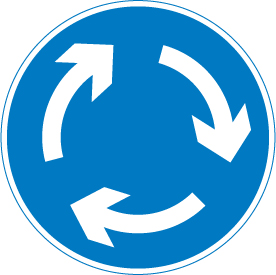
Mini-roundabout
Give way to traffic from the right and pass around the centre marking.
Link to this sign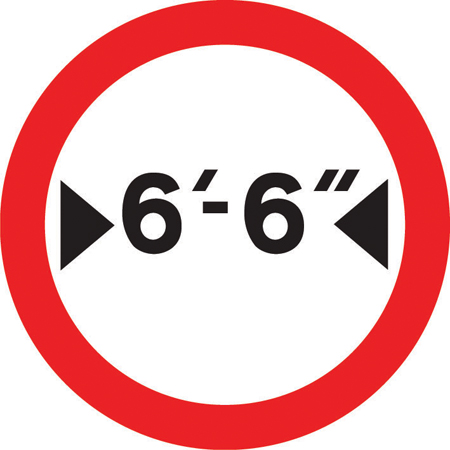
Height restriction
Vehicles over the displayed height must not pass.
Link to this sign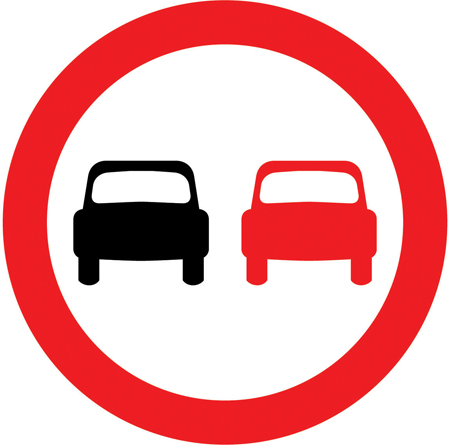
No overtaking
You must not overtake motor vehicles until the restriction ends.
Link to this sign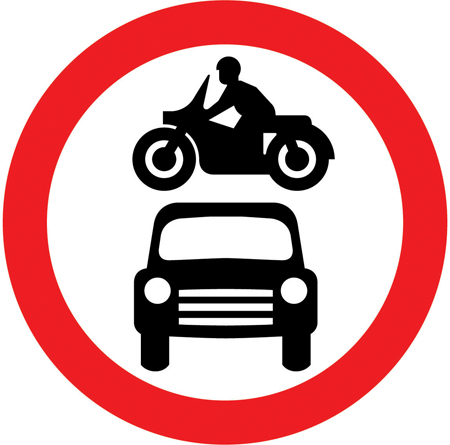
No motor vehicles
Motor vehicles are prohibited beyond the sign.
Link to this sign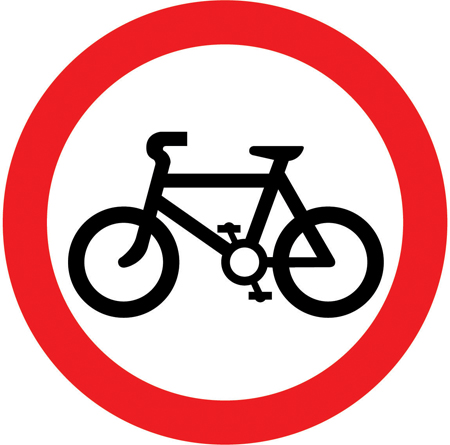
No cycling
Cycling is prohibited beyond the sign.
Link to this sign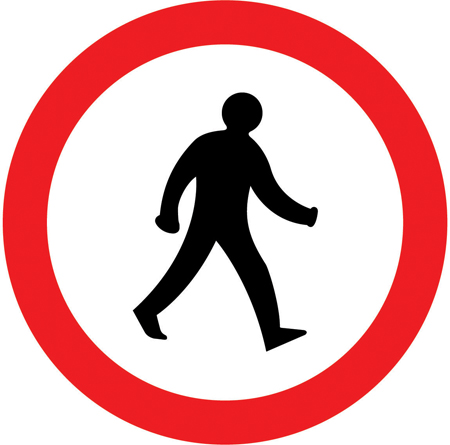
No pedestrians
Pedestrians must not proceed beyond the sign.
Link to this sign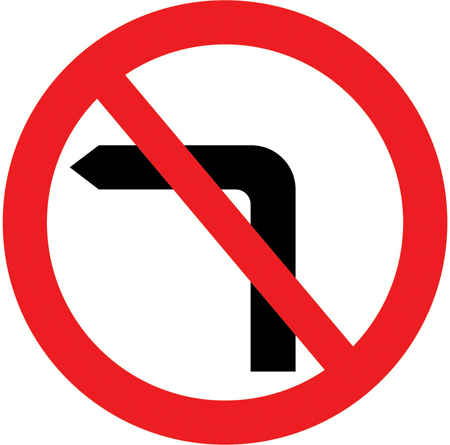
No left turn
You must not turn left at the junction.
Link to this sign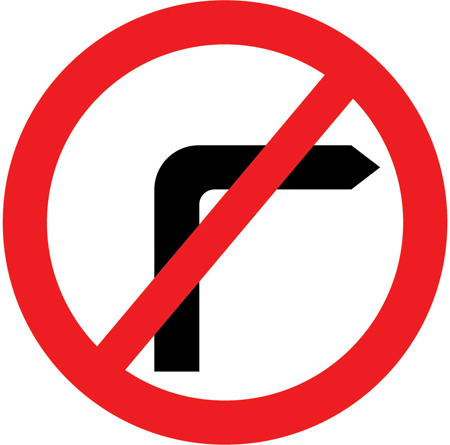
No right turn
You must not turn right at the junction.
Link to this sign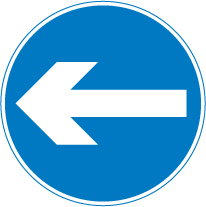
Turn left ahead
You must turn left in the direction shown.
Link to this sign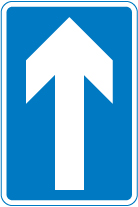
Ahead only
You must continue straight ahead.
Link to this sign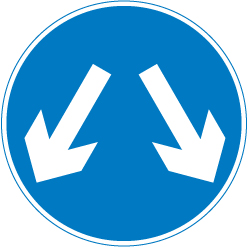
Pass either side
You may pass the obstruction on either side.
Link to this sign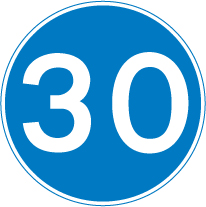
Minimum speed
You must travel at or above the shown speed unless conditions make that unsafe.
Link to this sign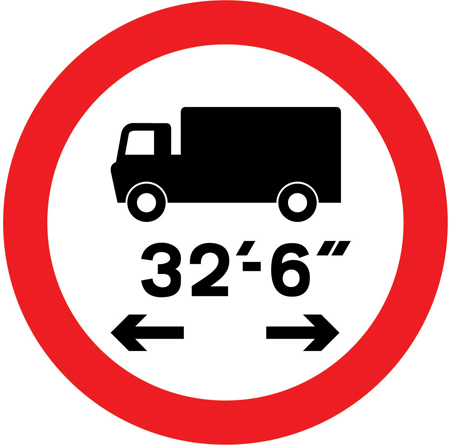
Width restriction
Vehicles wider than the displayed width must not pass.
Link to this sign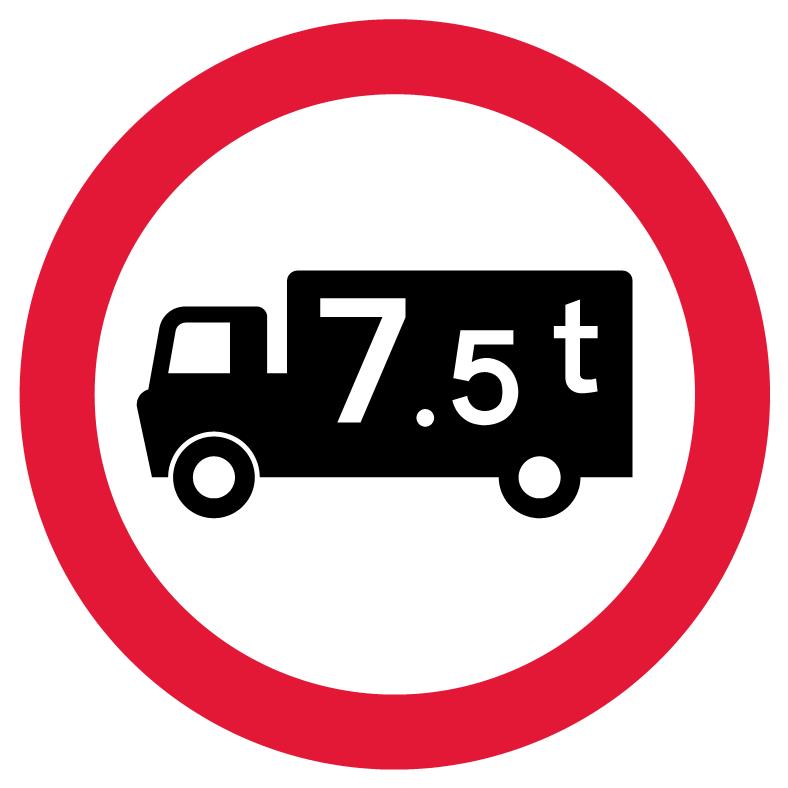
Maximum gross weight
Vehicles above the displayed gross weight are prohibited.
Link to this sign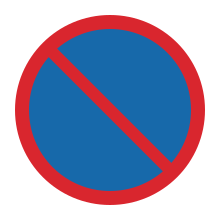
No waiting
Waiting is prohibited during the times shown on nearby plates.
Link to this sign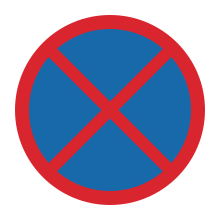
No stopping
Stopping is prohibited during the signed period except for stated exemptions.
Link to this signWarning signs
A red triangle warns about the road ahead. Identify the hazard, then prepare the speed, space and observation it needs.
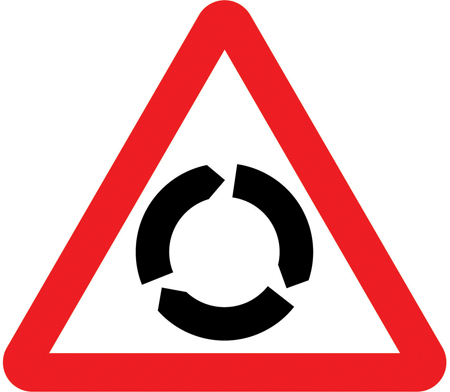
Roundabout ahead
A roundabout is ahead. Prepare to give way and choose your lane.
Link to this sign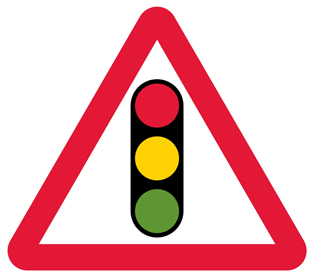
Traffic signals ahead
Traffic lights are ahead. Be ready to slow or stop.
Link to this sign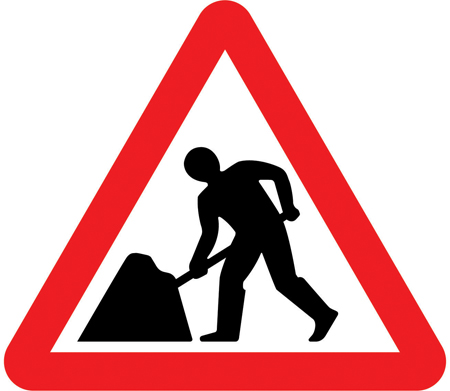
Road works ahead
Workers or temporary works may be in or beside the road.
Link to this sign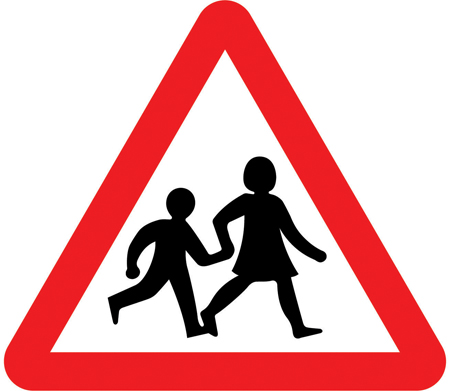
Children going to or from school
Children may be crossing or near the road.
Link to this sign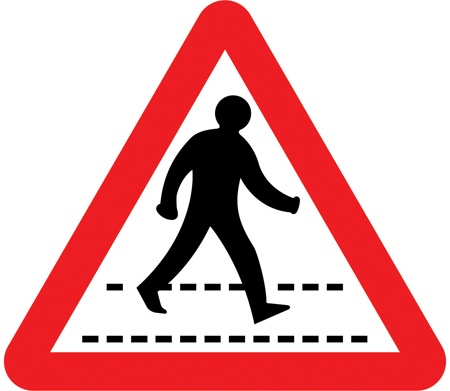
Pedestrians in road ahead
Pedestrians may be in the road or crossing ahead.
Link to this sign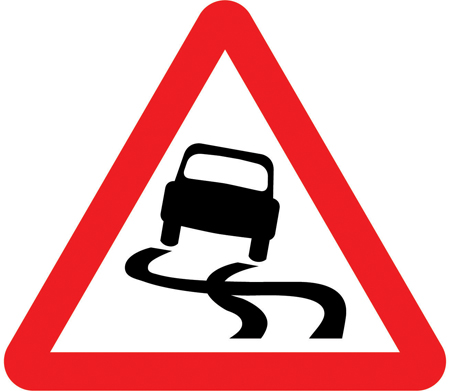
Slippery road
The road may be unusually slippery. Reduce speed and avoid harsh inputs.
Link to this sign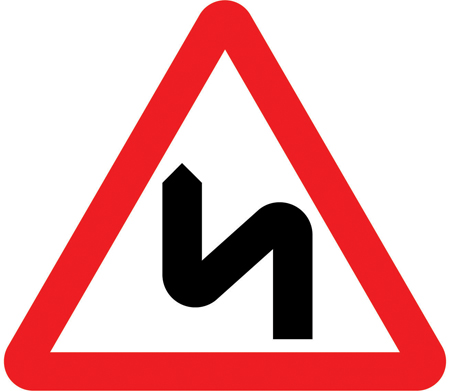
Double bend, first to the left
Two bends are ahead, with the first bending left.
Link to this sign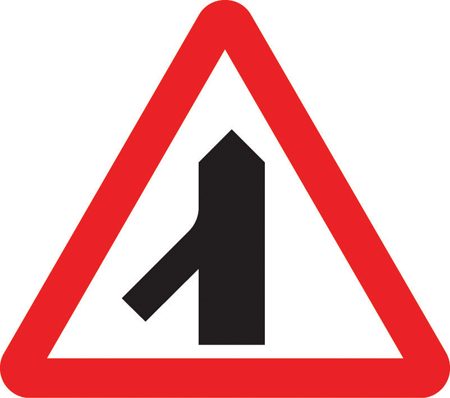
Side road ahead
Traffic may emerge from a side road ahead.
Link to this sign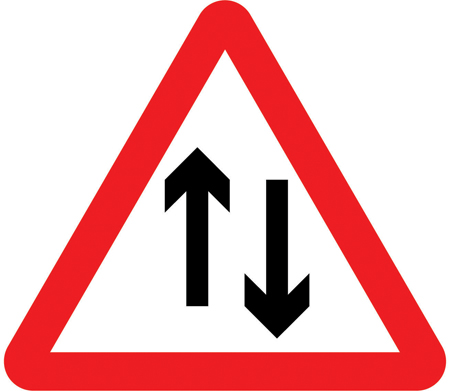
Two-way traffic
Traffic travels in both directions on the road ahead.
Link to this sign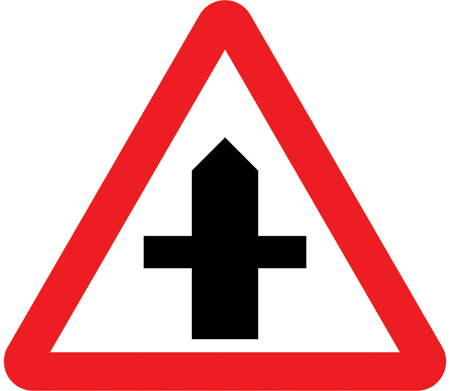
Crossroads ahead
A crossroads is ahead. Look for traffic from both sides.
Link to this sign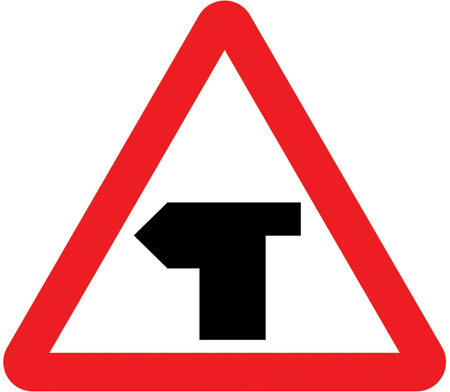
T-junction ahead
The road ends at a T-junction. Prepare to turn and give way as signed.
Link to this sign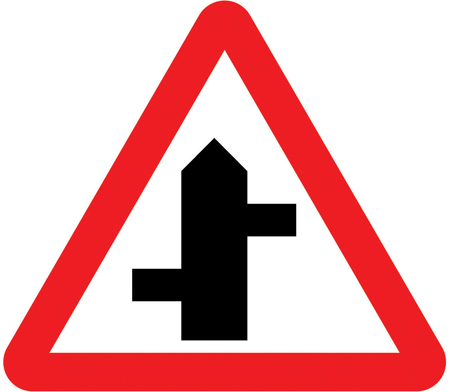
Staggered junction ahead
Side roads join in quick succession from opposite sides.
Link to this signTraffic merges from the left
Another traffic stream joins from the left.
Link to this sign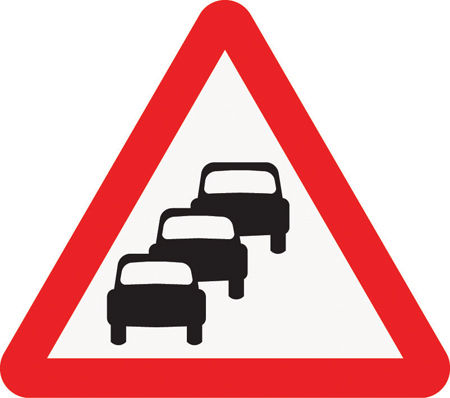
Traffic queues likely ahead
Be prepared to slow or stop for a queue.
Link to this sign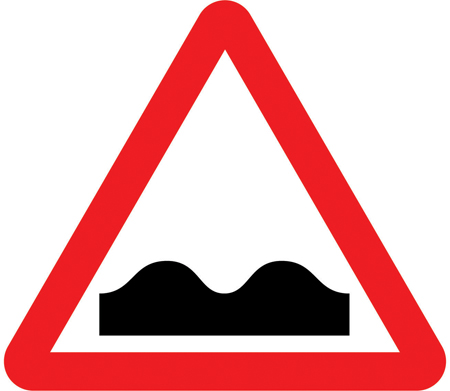
Uneven road
The road surface ahead is uneven.
Link to this sign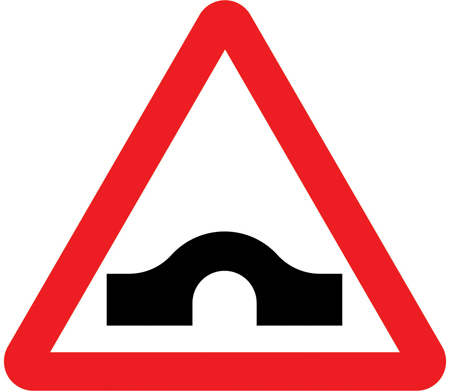
Road hump ahead
A raised traffic-calming feature is ahead.
Link to this sign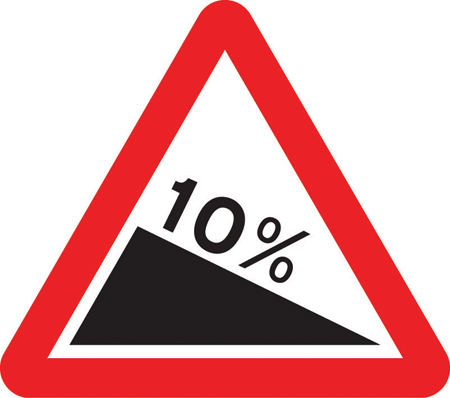
Steep hill downwards
A steep downhill gradient is ahead.
Link to this sign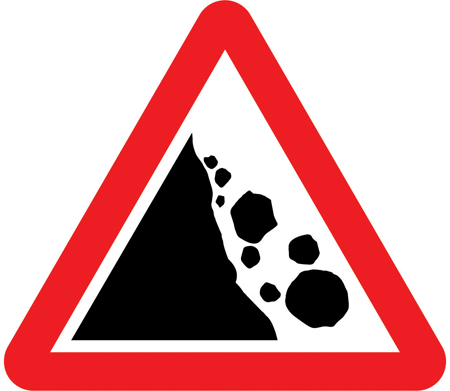
Falling or fallen rocks
Rocks may fall or already be lying in the road.
Link to this sign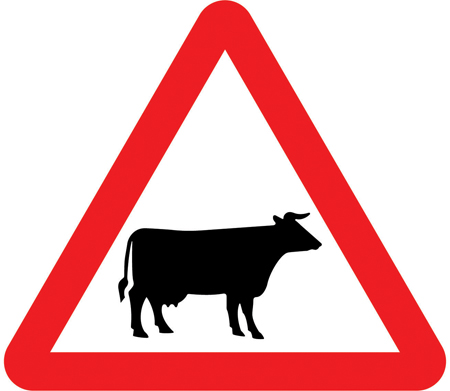
Cattle in road ahead
Farm animals may be crossing or walking in the road.
Link to this sign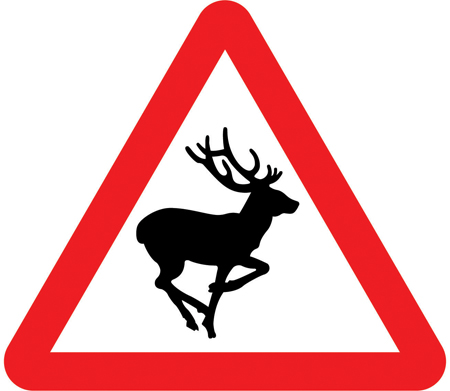
Wild animals
Wild animals may cross the road ahead.
Link to this sign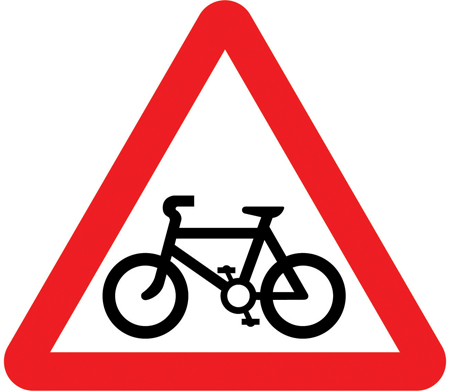
Cycle route ahead
Cyclists may be crossing or joining the road.
Link to this sign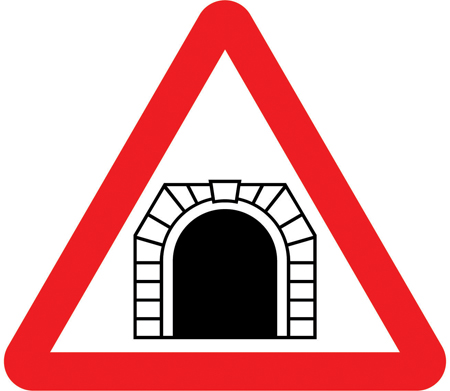
Opening bridge ahead
A bridge ahead can open. Obey barriers and signals.
Link to this sign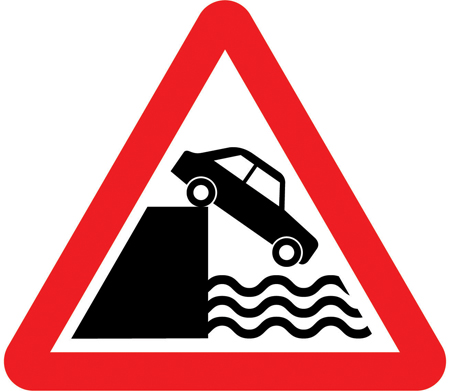
Unprotected quayside or riverbank
The road runs close to an unprotected water edge.
Link to this sign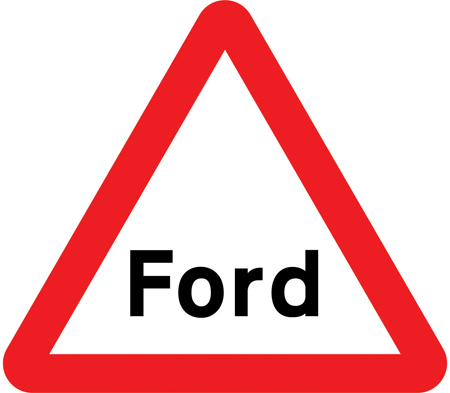
Ford ahead
The road passes through water ahead.
Link to this signInformation signs
These signs help you identify a road, facility or permitted route. Colour, symbol and wording work together.
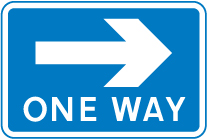
One-way traffic
Traffic may travel only in the direction shown.
Link to this sign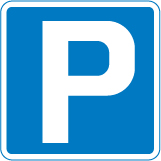
Parking place
A designated parking place is available.
Link to this sign
Tunnel ahead
A tunnel is ahead. Be ready to use lights and follow tunnel rules.
Link to this sign
Motorway begins
Motorway rules apply from this point.
Link to this sign
End of motorway
Motorway rules end. Check the new road type and speed limit.
Link to this sign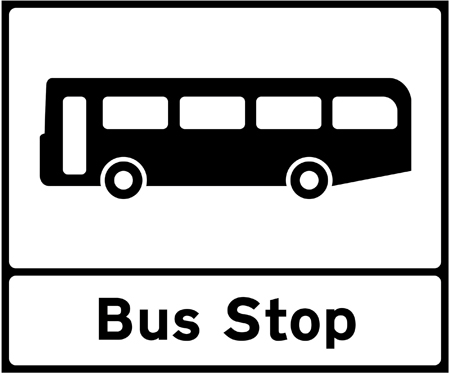
Bus stop
A marked place where buses stop for passengers.
Link to this sign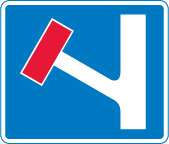
No through road
The road has no exit for through traffic.
Link to this sign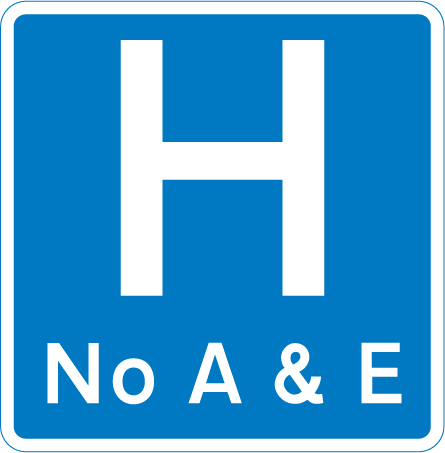
Hospital
A hospital is nearby; avoid unnecessary noise.
Link to this signRoad markings
White lines, yellow lines, kerb marks and coloured routes have different jobs. Read any accompanying signs before deciding what is permitted.
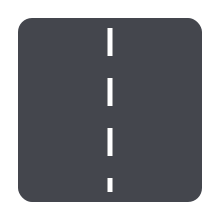
Broken centre line
The broken white line separates opposing streams of traffic.
Link to this sign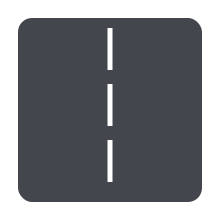
Hazard warning line
Longer white marks with shorter gaps warn of a hazard ahead.
Link to this sign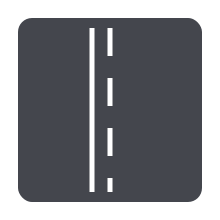
Double white lines — solid nearest
You must not cross or straddle the solid line except for limited legal exemptions when it is safe.
Link to this sign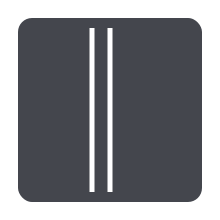
Double solid white lines
Do not cross or straddle the line nearest you. Because both lines are solid, drivers in both directions must follow this rule. The limited exceptions in Highway Code rule 129 apply only when it is safe.
Link to this sign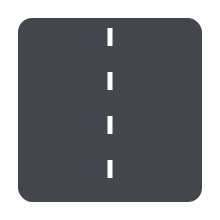
Lane line
Short broken white lines divide lanes travelling in the same direction.
Link to this sign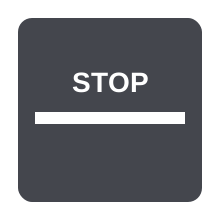
Stop line at a junction
Stop behind the solid white line when required by a stop sign or traffic signal.
Link to this sign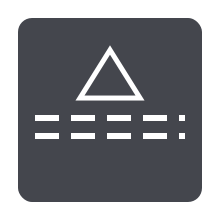
Give-way line
Give way at the broken double white line and do not enter unless it is safe.
Link to this sign
Yellow box junction
Do not enter unless your exit is clear, apart from the limited right-turn exception.
Link to this sign
Pedestrian-crossing zig-zags
The crossing approach must remain clear; stopping and overtaking restrictions apply.
Link to this sign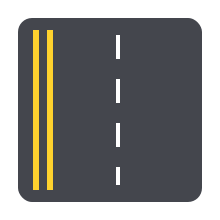
Double yellow lines
No waiting at any time, unless a specific exemption applies.
Link to this sign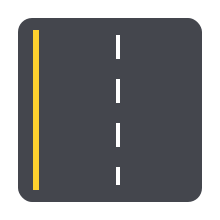
Single yellow line
Waiting is prohibited during the times shown on nearby signs or zone entry signs.
Link to this sign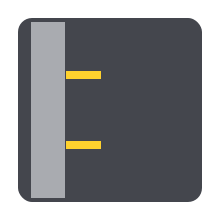
Single yellow kerb mark
Loading is prohibited during the times shown on the nearby plate.
Link to this sign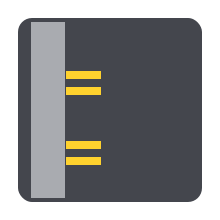
Double yellow kerb marks
Loading is prohibited at all times.
Link to this sign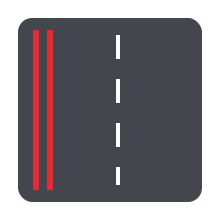
Double red lines
No stopping at any time except where a signed exemption or bay permits it.
Link to this sign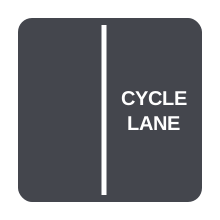
Cycle lane
The marked lane is provided for cycles; a solid boundary carries a stronger restriction on entry.
Link to this sign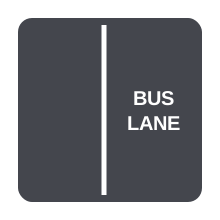
Bus lane
The lane is reserved for the vehicles and times shown on its signs.
Link to this signSupplementary plates
A plate can add a distance, operating time, direction or exception. Read it with the main sign, not as a separate instruction.
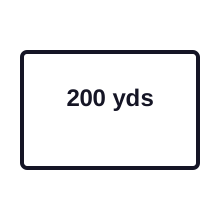
Distance to hazard plate
The warning or restriction begins at the distance shown.
Link to this sign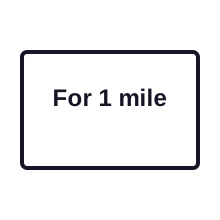
Hazard for a distance plate
The hazard continues for the distance shown.
Link to this sign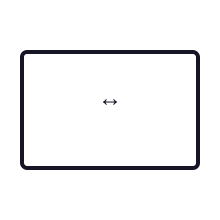
Direction to hazard plate
The arrow shows which direction the signed hazard or restriction applies.
Link to this sign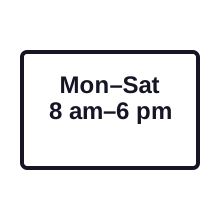
Times of operation plate
The restriction applies during the days and times shown.
Link to this sign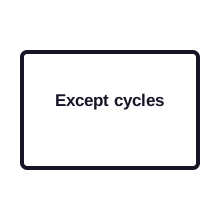
Except cycles plate
Cycles are exempt from the prohibition shown on the main sign.
Link to this sign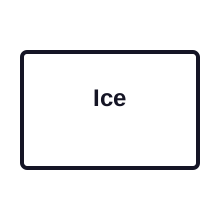
Ice supplementary plate
The warning applies when ice or icy conditions are likely.
Link to this sign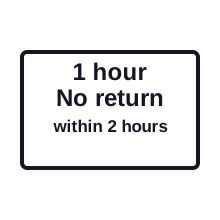
Parking maximum-stay plate
Parking is allowed only for the maximum time shown and return may be prohibited for a further period.
Link to this signNo matching sign. Try a shorter word, such as “speed”, “stop” or “yellow”.
Signs that are easy to mix up
No entry or no motor vehicles?
No entry prevents vehicles entering from that direction. The car-and-motorcycle symbol prohibits motor vehicles. Read any exception plate: similar-looking red signs can apply to different road users.
No waiting or no stopping?
The single red diagonal on blue means no waiting; the red cross means no stopping. Check the signed times, exemptions and permitted bays before deciding what you can do.
Distance to a hazard or length of a hazard?
“200 yds” beneath a warning tells you how far ahead it is. “For 1 mile” describes how far it continues. Both change how you prepare, but they answer different questions.
Yellow line or yellow kerb mark?
A yellow line along the road controls waiting. A yellow mark on the kerb controls loading. One location can have both, so read both before assuming an activity is allowed.
A ten-minute road-sign revision session
- Compare one confusing pair.
Cover the labels and explain the difference. Identify the detail that changes the meaning, not just the colour.
- Say what you would do.
For a warning, name what you would look for ahead. For a restriction, explain what is prohibited and whether a plate changes when it applies.
- Check recall without the answer.
Try a short set in Layna Plus signs practice, then review any misses. Revisit the pair in a later session rather than repeating it immediately until it feels familiar.
A sign question in a mixed theory mock checks whether you can recognise it outside the order of this reference page. Keep unfamiliar meanings in revision even if the rest of the paper goes well.
Learn the sign, then the decision
Try explaining a sign without its name: what must you do, what should you expect and what extra information would you look for? Then test recall in road-sign practice or see the line and sign together in the free junctions lesson.
Contains public sector information licensed under the Open Government Licence v3.0. © Crown copyright. Licence terms. Department for Transport sign artwork is used where available; supplementary road-marking illustrations are by Layna. Sources and review process.